Sunday, 30 March 2014

वसुंधरेवरील तारे

India during Diwali - courtesy NASA
मित्रांनो,

नमस्कार. तुम्ही कधी रात्रीच्या अंधारात आकाश पाहिलेत का हो? नसले तर जरूर पहा. विशेषतः शहरापासून दूर एखाद्या शांत खेड्यात जाऊन. आणि ते सुद्धा अमावस्येच्या रात्री. मग तुम्हाला कळेल की ते नभांगण कित्येक असंख्य तार्यांनी उजळून टाकले आहे ते! त्यातील काही तारे स्वयंप्रकाशित तर काहींनी उसना प्रकाश घेतलेला. पण सर्वांच्या अप्रतिम टीम वर्कने संपूर्ण आकाशाला जणू चंदेरी झळाळी प्राप्त होते. आपले हे कर्तृत्व त्या तार्यांना समजत असेल का? नक्कीच नाही, तरीही ते रोज प्रकाशतात व आसमंत उजळून टाकतात, एखादे झाड जसे प्रवाशाला अखंड सावली निस्वार्थीपणाने देते ना, अगदी तसेच. 

आपल्या पृथ्वीवरही भारतामध्ये असे असंख्य तारे आहेत. काही खूप प्रसिद्ध तर काही तुलनेने कमी प्रसिद्ध. पण काही मात्र प्रसिद्धीपासून दूर राहून त्यांचे काम अनेक वर्षे करत आहेत, व भारतरूपी नभांगण आपल्या कामाच्या शुद्ध प्रकाशाने उजळून टाकण्याचा प्रयत्न करत आहेत. या लोकांना भेटलात तर तुम्हाला लक्षात येईल की ते करत असलेल्या कामामध्ये ते प्रचंड आनंदी व समाधानी आहेत, जणू त्यांच्या कामाचे फलित हेच त्यांच्यासाठी एक मोठे पारितोषिक आहे. आजकालच्या व्यावहारिक/भौतिकवादी (materialistic) जगात एखादे व्रत घेऊन, सर्व मान-सन्मान, प्रसिद्धी, पैसा, कुटुंब इ. गोष्टींपासून दूर राहून आपले इप्सित ध्येय गाठण्यासाठी अखंड परिश्रम करत राहणे आणि ते सुद्धा कोणाविषयी तक्रार न करता, ही अतिशय अवघड गोष्ट आहे.

इथे मला स्वातंत्र्यवीर सावरकरांच्या जीवनातील एक प्रसंग वाचलेला आठवतो. सावरकर अंदमानात तुरुंगात असताना त्यांच्या पत्नी - माई - त्यांना भेटायला गेल्या. सावरकरांचे हाल बघून त्या हेलावून गेल्या व त्यांचे डोळ्यांतून अश्रू वाहायला लागले. तेंव्हा सावरकर त्यांना म्हणाले की अगं माई, रडू नको, संसार काय चिमण्या-कावळे पण करतात, आपल्याला अभिमान वाटायला हवा की आपण आपला संसार या भारतभूसाठी सत्कारणी लावत आहोत. 

आपण ज्या लोकांची ओळख या सदरातून करून घेणार आहोत ते सर्व जण एका अर्थाने जीवनव्रतीच आहेत.

आधी म्हटल्याप्रमाणे भारतामध्ये असे असंख्य तारे आहेत उ. दा. डॉ. अब्दुल कलाम, कै. बाबा आमटे, डॉ. जयंत नारळीकर, डॉ. माशेलकर, श्री. बाबासाहेब पुरंदरे, श्री. बिंदुमाधव जोशी,  इ.  पण या सर्वांबद्दल खूप लोकांनी याआधीच इतके लिहून ठेवले आहे की मी आणखी वेगळे काय लिहिणार? 

मग मनात आले की मी ज्यांना व्यक्तीशः ओळखतो आणि ज्यांची जगाला नगण्य किंवा अतिशय थोडी माहिती आहे अशांबद्दल लिहावे. माझे परमभाग्य की मी या लोकांचे कार्य गेले काही वर्षे अतिशय जवळून बघितले आहे. त्यांची कामावरची अविचल निष्ठा, त्यासाठी वाट्टेल तितके परिश्रम करण्याची तयारी आणि निस्वार्थी भावना या गुणांनी मी स्तंभित झालो आहे. 

या लोकांकडे बघताना मला एका गीताच्या खालील ओळी आठवतात:

तन समर्पित, मन समर्पित, और यह जीवन समर्पित, चाहता हूँ मातृभू तुझको अभी कुछ और भी दूं !

आणि मग ठरवले की आपण आपल्या मर्यादित मित्रपरिवाराला त्यांची ओळख करून द्यायची, म्हणून हे सदर. आणि याकरता वर्षप्रतिपदेसारखा दुसरा मंगल दिवस तो कोणता?

तेंव्हा उद्या गुढीपाडव्याच्या शुभमुहूर्तावर या सदरातील पहिले पुष्प सादर करीत आहे.

त्यांची ओळख झाल्यावर तुम्हालाही कदाचित वाटेल की किती सार्थ आहेत वरील ओळी या लोकांसाठी. यातून आपल्या सर्वांना थोडे अंतर्मुख होऊन समाजासाठी/देशासाठी काहीतरी करण्याची प्रेरणा मिळाली तर माझ्या लिखाणाचे सार्थक झाले असे मला वाटेल. 

गुढीपाडवा आणि नवीन वर्षाच्या तुम्हा सर्वांना शुभेच्छा. तुमच्या प्रतिक्रिया मला जरूर कळवा. धन्यवाद.

Saturday, 8 March 2014

अनमोल रतन (Precious Jewels) - 3 : Song dedicated to today's women

Friends,

This is the third song in the series. In my view, this song very aptly epitomizes today's woman, particularly a strong woman of the new age. And what could be a better day than today - the "International Women's Day" - to publish this song?


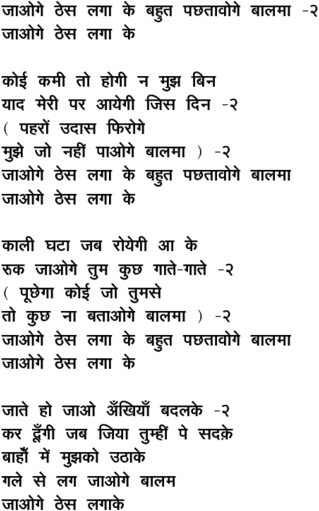
Song #3 : जाओगे ठेस लगाके, बहोत पछताओगे बालम… 


Film       : Fareb (1953)

Director : Shaheed Latif

Cast       : Kishore Kumar, Shakuntala, Lalita Pawar, Zohra Sehgal, Tiwari, Amar

Anil Biswas and Lata Mangeshkar
Courtesy: www.stampboards.com

Lyrics:
Majrooh Sultanpuri

Composer:
Anil Biswas

Singer:
Lata Mangeshkar


USP of the song:


However this particular song जाओगे ठेस लगाके stands out from the rest, here is why:

If you look at most of the films from the Black & White era, you will find that all the female lead characters in the film were portrayed as extremely soft, sensitive, dependent, low in confidence, पतिव्रता, etc. and which was more or less true in those days since Indian community was mostly male dominated. You will remember dialogues like "मै तुम्हारे चरणों की दासी हूँ" or "तुम मर्द हो ना, इसीलिए हमेशा दिमाख से काम लेते हो, कभी कभी दिल से भी काम लिया करो". 

And here comes the heroine of this film who drags herself out of the traditional image and virtually blasts off her beloved with words which were very strong compared to her peers in other films. This was rare and extremely brave considering the era in which the film was released. Just look at the words in the stranza - पहरो उदास फिरोगे मोहे जो नहीं पाओगे बालम or जाते हो तो जाओ अँखियाँ बदलके...

The lead female role was performed by Shakuntala. I tried to check if it was Shakuntala Paranjapye or Baby Shakuntala, but unfortunately cannot confirm anything. 

I wish if it would have been Shakuntala Paranjapye (mother of Sai Paranjapye), how befitting it would have been to have this song filmed on her; since she herself was one of the revolutionary women in India in those days because of her work in the family planning field since 1938.

Hats off to late Majrooh ji for penning down one of the most brave songs in the history of Hindi film music. Composition by late Anil da has also matched the revolutionary mood of the female character. It was Anilda's pure genius that all 3 stranza have been composed differently. Lata ji, as usual, has been phenomenal in her rendering.

So, enjoy the song and the day!


Lyrics: (courtesy http://smriti.com/hindi-songs/)


Friday, 31 January 2014

अनमोल रतन (Precious Jewels) - 2

Friends,

This is the second song in the series from the film 'Bewafa' (1952).


Song #2: दिल मतवाला लाख संभाला … 


Film       : Bewafa (1952)

Director : M. L. Anand

Cast       : Raj Kapoor, Nargis and Ashok Kumar


Lyrics          : Sarashar Sailani
Composer    : Alla Rakha Quereshi
Solo Singers : Lata Mangeshkar and Talat Mahmood


Alla Rakha Quereshi
The stylistic music of Bewafa was worthy of kudos. The simple reason being that it was composed by the world famous Tabla maestro Ustad Alla Rakha


Alla Rakha Quereshi was born on April 29, 1919, at Phagwal village of Jammu, 80 kms from Lahore. Khan was fascinated with the sound of tabla since the age of 12. The determined young lad ran away from the house and became a disciple of Mian Qader Baksh of the Punjab Gharana, who initiated him into the world of music.
 

He started his musical career as an accompanist in Lahore and then as an AlI India Radio staffer in Mumbai in 1940. Soon after he would compose music for a couple of Hindi films from 1943-48. He composed music for around 40 films in his film music career. Some of the well known films where Alla Rakha was music composer are Maa Baap (1944), Sabak (1950), Bewafa (1952), Khandaan (1955) and Parveen (1957).

In the film 4 songs were in Talat Mahmood's voice. 'Tum Ko Fursat Ho Meri Jaan..', 'Tu Aaye Na Aaye Ae Teri Khushi....', 'Dil Matwala...' and 'Kaam Haathon Ka Hai...'.


Lata sang 3 songs. 'Badnasibi Ka Gila Ae Dil-e-Nashaad Na Kar..', 'Isi Ka Naam Duniya Hai...' and 'Dil Matwala Laakh Sambhala...'. The song 'Aa Jao Mere Dilruba..' was sung by Geeta Dutt and 'O Tana Der Na Tana Na Na..' was sung by Shamshad Begum


USP of the song: 

a) Music composed by Tabla Maestro - late Alla Rakha
b) Same song, different composition sung solo by male (Talat) and female singer (Lata)

It has been a strange coincidence that whenever the same song has been sung by a male singer and a female singer in the same film, the male version has got more popular among the audience. I wonder what could be the reason of the fascination for the male voice. 

Some examples that come to my mind are as follows; I am sure there are many more...

1) Zindagi bhar nahin bhoolegi barasaat ki raat... - Rafi and Lata - Gateway of India
2) Jeevan ke safar mein raahi... - Kishore and Lata - Munimji
3) Zindagi ek safar hai suhana... - Kishore and Asha Bhosale - Andaz
4) Dil hoom hoom karein ghabaraye - Lata and Bhupen Hazarika - Rudali
5) Kuch na kaho kuch bhi na kaho... - Lata and Kumar Shanu - 1942, A love story

कहानी behind the song: 


The film depicts the story of a poor girl Roopa (Nargis) who is forced by her alcoholic uncle to work. When she can't meet her uncle's demand to earn money she is thrown out of the house by her uncle when her neighbour Raj (Raj Kapoor) comes to her aid and loans her some money but despite it she finds it difficult to make ends meet and she meets Ashok - a famous painter - for whom she starts acting as a model for his paintings. Roopa's portraits as painted by Ashok become a big hit. Later Roopa marries Ashok but soon Raj reenters her life. Roopa is extremely happy seeing her childhood friend Raj again after a long time and introduces him to Ashok. Both of them urge Raj to sing a song. Raj then sings 'Dil matawala...' for Roopa. The song continues to linger on Roopa's mind and next day morning she sings the same song. The story then follows the love triangle between Roopa, Raj and Ashok. 


Lata's version below has a beautiful musical prelude to it which is equally enjoyable to the actual song.


Talat's version is extremely soft and soothing to ears; don't miss the facial expressions of all the 3 actors, particularly just before the line 'Kar gaye baatein do matawale...'. 

In a strand, till today the bewitching effect of Talat's velvety voice in 'Bewafa' lingers on.


Lyrics: (courtesy: http://www.hindigeetmala.net)